Home energy assessment kits · Shopify to WooCommerce
HomeBoost
HomeBoost makes home energy assessment something a homeowner can do without booking an auditor. They ship the BoostBox, a kit of instruments the homeowner runs through their own house and sends back, in return for a report on where the home is losing energy.
Most volume arrives through utility partners, each with their own pricing, program name, and rules. And the kit is lent, not sold, so every order carries a return leg, a deadline, and a fee if it never comes home.
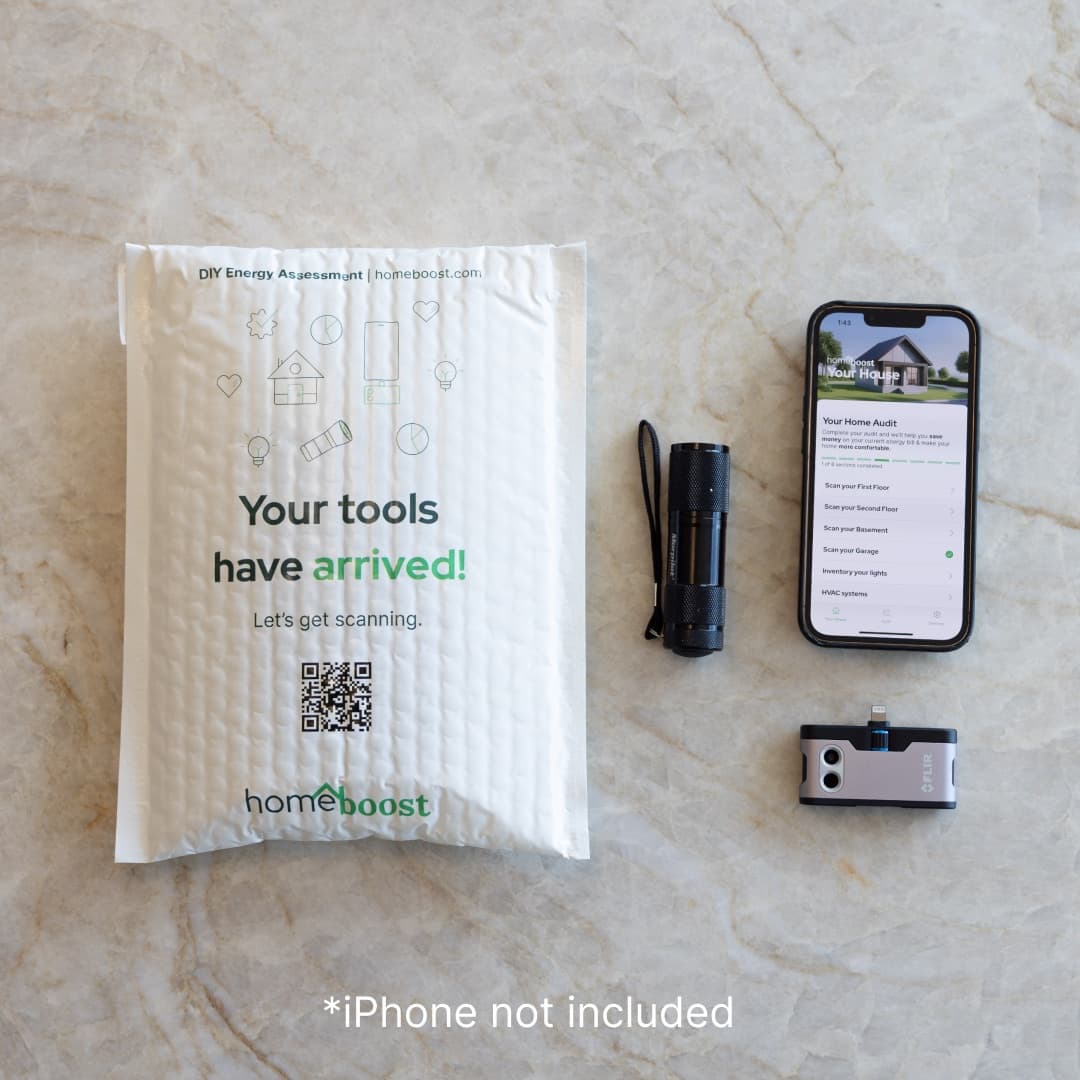
They came to us needing a custom billing model Shopify had no room for: a kit that ships out, comes back, and charges a fee when it doesn't, sold through utility partners who each want their own pricing. We migrated them over, then built it.
- WooCommerce
- Custom order lifecycle
- Stripe off-session billing
- REST + webhooks
- GeneratePress + Elementor
- ShipStation
- Cookiebot
- Git + CI + PHPUnit
Migrated the store to WooCommerce.
Products, customers, and order history, onto a platform where the order lifecycle could be extended instead of worked around.
Built the rental billing engine.
The whole model turns on shipping hardware worth more than the order and charging only if it never comes back. Every kit order tracks its own return window, the card is vaulted at checkout for later off-session use including on promotional orders where nothing is taken at the time, and the charge for an unreturned kit runs automatically against that saved card. Every billing action lands in an audit trail, and support can charge, cancel, or extend a deadline by hand.
Made launching a utility partner a no-code job.
It started as hardcoded configuration for a handful of utilities. A partner is now a content type carrying its own pricing, validation, checkout behavior, landing page, email branding, and copy, so their staff can launch a program without a developer. Referral attribution resolves across URL parameter, cookie, and form data, including when more than one partner is in play, and partner pricing applies automatically across product pages, cart, and checkout.
Built pluggable eligibility validation.
Utilities prove a customer belongs to their program in different ways, so validation is pluggable rather than branched: one validates an account number against a pattern, another checks the address against an imported service-area database. Per partner, checkout can be set to require verification and refuse an order that fails it, with a dedicated order status holding anything still awaiting a check.
Built the partner-branded email system.
Three custom transactional emails carry the return lifecycle: a reminder, an urgent follow-up, and the charge notice. Every customer email including the stock WooCommerce ones re-skins per partner with their logo, colors, and footer, and every line of copy is editable per partner, with the global default pre-filled and a blank field falling back to it. The admin preview renders a real partner's branding against a sample order with sending hard-blocked, so a preview can never fire at a customer.
Added a second commerce model on the same checkout.
Contractor partners buy assessments in blocks rather than renting a kit. The card is captured at checkout with nothing taken, then the block is charged once their first scan lands. The total zeroes in a way that keeps line items, receipts, and revenue reporting accurate, and these orders are fully separated from the kit automation so they never trigger return reminders or kit charges.
Built the operations tooling around returns.
A returns dashboard covering every tracked order, searchable and sortable, with active, overdue, returned, and charged counts and system health checks, bulk actions for marking kits returned, and a per-order panel on the order screen. Their team runs the return lifecycle from there rather than through a developer.
Put the code on rails.
Custom theme and plugin moved into client-owned, version-controlled repositories with an automated deployment pipeline to staging and production, where before that deploys were manual. A test suite covers the billing overrides, partner settings, email branding, and webhooks, which is what makes changing any of it safe.
Closed out cookie compliance.
Their consent scan kept failing. We found a duplicate consent script loading from the theme, removed it, then classified the first-party functional cookies the scan couldn't identify on its own.